Network Penetration Testing

Penetration testing across your entire network

Manual, consultant-led testing of your external perimeter, internal networks, and wireless infrastructure. Fixed-price quotes within one business day, nothing subcontracted.

Accreditations and memberships

Network penetration testing services for internal and external infrastructure

Network Security Testing

What is network penetration testing?

Network penetration testing simulates real-world attacks against your network devices, servers, perimeter services, and internal systems to identify what an attacker could actually exploit.

It covers both external testing, assessing what is exposed and reachable from the internet, and internal testing, which focuses on what an attacker or compromised insider could access once inside your network. Together, they give a complete picture of your network security posture.

Network testing is approached differently from application testing. Where application security focuses on software vulnerabilities in web apps and APIs, network testing focuses on service misconfigurations, unpatched systems, weak credentials, and trust boundary failures between network segments.

The goal is to establish what an attacker could reach, how far they could move, and which weaknesses are worth fixing first.

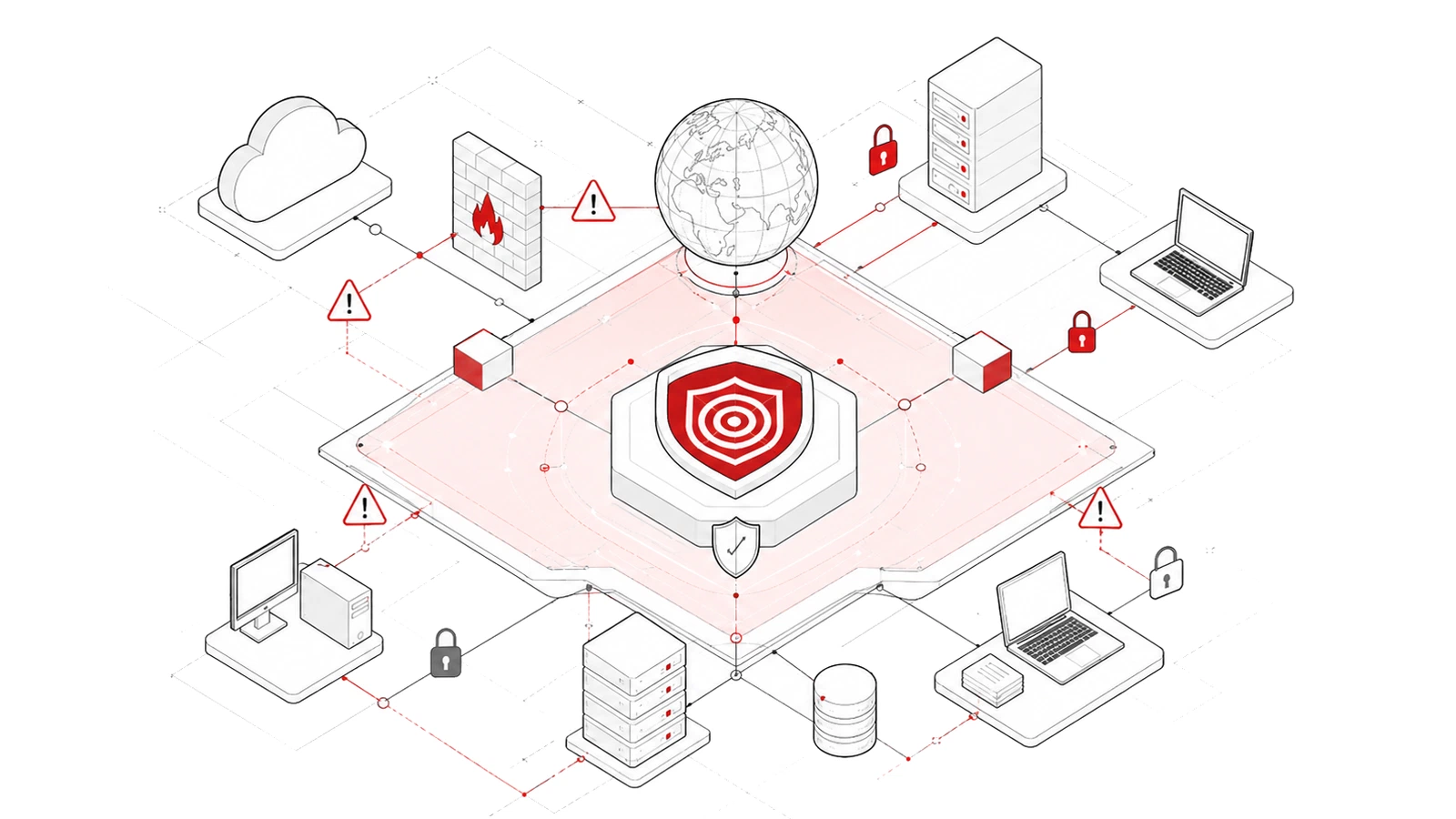
Typical network attack surface

  • Firewalls & edge devices
  • Servers & hosts
  • Active Directory & domain services
  • Remote access (VPN, RDP)
  • Wireless infrastructure

Why it matters

Application testing looks at software flaws. Network testing looks at the layer underneath: unpatched services, weak configurations, and the trust between systems that turns a single foothold into domain access.

Who Needs This

Who needs network penetration testing?

Any organisation with network infrastructure that processes sensitive data, has systems accessible from the internet, or operates under compliance requirements benefits from regular network security testing.
Get a Network Pentest

Organisations with internet-facing systems

If you have services accessible from the internet, they are continuously probed by automated scanners and opportunistic attackers. External penetration testing identifies what can actually be exploited, not just what is exposed.

Businesses seeking to ISO 27001, PCI DSS, or SOC 2

Multiple frameworks recommend or require evidence of independent penetration testing. We provide detailed reporting and methodology documentation aligned to auditor and QSA requirements.

Teams with hybrid or distributed environments

Cloud infrastructure, VPNs, and remote access services extend the attack surface beyond the traditional perimeter. Network testing should account for how these components interact with your on-premise environment.

Organisations that have not tested recently

Configuration drift, new deployments, and newly disclosed vulnerabilities mean that even well-managed environments can develop security gaps between tests. Annual testing provides a current and accurate baseline.

Scope & coverage

What network penetration testing covers

Scope depends on what your environment contains and which parts of it you need assurance over. During scoping we confirm exactly what falls within your engagement.

Below are the areas a network assessment typically covers:

The external perimeter

Everything reachable from the internet: firewalls, gateways, exposed management interfaces, mail and DNS infrastructure, and cloud edge assets. Covered in detail by external penetration testing.

Internal networks and Active Directory

Domain configuration, credential handling, privilege escalation paths, and lateral movement from an assumed-breach position. Covered in detail by internal penetration testing.

Remote access services

VPN gateways, RDP, SSH, and similar endpoints. These sit on the boundary between external and internal, and are among the most frequently exploited entry points into a network.

Wireless infrastructure

Corporate and guest wireless, encryption configuration, network isolation, and rogue access point detection. Available as a standalone Wi-Fi security assessment.

Segmentation and trust boundaries

Whether your network segments genuinely contain an attacker. We test the controls between zones rather than assuming the documented design matches what is deployed.

Patch and configuration hygiene

Missing patches, unsupported software, default credentials, and weak service configuration across in-scope hosts. A vulnerability assessment is a practical baseline if you are not yet ready for a full penetration test.

Get a fixed price for your network penetration test

Tell us about your environment and we'll respond with a fixed-price proposal within one business day. No obligation.

Our Pentest Methodology

How we conduct network penetration testing

Network testing follows a structured process: establishing what exists, determining what is exploitable, and documenting impact in terms that support both technical remediation and compliance evidence.

See our full penetration testing methodology for how this applies across every engagement type.

01

Scoping & Rules of Engagement

We agree the target IP ranges, domains, sites, and testing boundaries with you before any active work begins. You specify constraints such as timing windows, excluded systems, and acceptable techniques, and we operate strictly within them.
02

Discovery & Enumeration

We map what is actually present rather than what the documentation claims: live hosts, open ports, running services, software versions, domain structure, and trust relationships between systems.
03

Vulnerability Analysis

Manual enumeration combined with targeted scanning to identify missing patches, exposed management interfaces, weak credentials, and misconfigured services. Every finding is manually validated before it reaches your report.
04

Exploitation & Lateral Movement

Where weaknesses exist, we attempt controlled exploitation to confirm real-world impact. From any foothold gained, we assess how far an attacker could move, what privileges they could obtain, and which systems and data they could ultimately reach.
05

Reporting & Debrief

Findings are documented with reproduction steps, severity scoring, and remediation guidance mapped to CVE, CVSS, and MITRE ATT&CK where applicable. We provide methodology notes suitable for QSA and auditor requirements, and offer a debrief session to walk through the results.

Key Deliverables

What's included in the assessment?

Every network penetration test is delivered as a defined set of outputs supporting both technical remediation and executive decision-making.
  • Executive Report

    A non-technical summary of findings with risk ratings and recommendations suitable for board and senior management stakeholders.
  • Technical Report

    Detailed findings with reproduction steps, severity scoring, remediation guidance, and mappings to CVE, CVSS, and MITRE ATT&CK where applicable.
  • Debrief Session

    An offer of a debrief call to walk through findings, discuss remediation priorities, and answer questions from both technical and executive stakeholders.
  • Retesting

    For externally-based assessments, focused retesting of remediated vulnerabilities is included as standard at no additional charge.
  • Attack Surface Center Access

    Complimentary access to our Attack Surface Center ASM platform for live finding visibility, collaborative tracking, and remediation management throughout and beyond the engagement.
  • Consultant-led Testing

    All testing is consultant-led by in-house staff. Your consultant works with you from scoping through to debrief, and nothing is outsourced or subcontracted.

Pricing

From £1,800

for network penetration testing

Not sure whether you need external, internal, or both? A 30-minute scoping call is free and gets you a fixed written quote.

No obligation · Strictly confidential · Quote within one business day

Pricing Examples

External network testingFrom £1,800
Internal network testingFrom £2,850
Wi-Fi security assessmentFrom £1,700
Vulnerability assessmentFrom £700
Indicative starting prices only. Your exact price is confirmed after a short scoping conversation - see full service pricing.

What's Included

  • Fixed-price proposal within one business day
  • Manual, consultant-led testing. Not automated scans
  • Report within 2 business days of testing completion
  • Combined engagements are better value than booking separately
  • No obligation quote, all enquiries are fully confidential

Common Questions

Network penetration testing - frequently asked questions

Network penetration testing covers the network devices, servers, perimeter services, and systems that make up your IT environment.

This includes external-facing assets such as firewalls, VPNs, remote access services, and cloud infrastructure, as well as internal systems including servers, workstations, Active Directory, and internal services.

The scope is agreed before testing begins and is tailored entirely to your environment.

It depends on the size of the environment and which parts are in scope. External network testing typically takes 2-5 days, internal network testing 3-8 days, and a Wi-Fi assessment 1-2 days.

Reports are delivered within 2 business days of testing completion. If you are preparing for your first assessment, our guide to scoping a network penetration test covers what information to have ready.

External network testing assesses what an attacker outside your network could reach and exploit, covering internet-facing services, perimeter devices, and cloud assets.

Internal network testing assesses what an attacker could do once inside your network, whether through a phishing compromise, an insider threat, or initial access that was gained externally. It covers Active Directory, lateral movement paths, privilege escalation, and access to sensitive systems.

Both are complementary and are frequently scoped as a combined engagement.

If you have never tested before and have systems exposed to the internet, external testing is the usual starting point because that is where opportunistic attacks begin.

Internal testing becomes the priority once your perimeter is in reasonable shape, or if your main concern is what a phishing compromise or a malicious insider could achieve. Most organisations testing annually cover both, and combined engagements are typically better value than booking them separately.

We will give you an honest recommendation during scoping rather than quoting for everything by default.

Pricing depends on the scope and type of testing. External network penetration testing starts from £1,800, internal network testing from £2,850, and Wi-Fi assessments from £1,700.

Combined engagements are typically better value than booking separately. See our penetration testing pricing guide for worked examples, or request a quote for a fixed-price proposal based on your specific environment.

Several major frameworks require or recommend regular network testing:

  • PCI DSS mandates annual external and internal penetration testing, plus additional testing after significant changes.
  • ISO 27001 requires technical vulnerability testing as evidence of ongoing security control assurance, but doesn't explicitly require penetration testing.

We provide methodology notes and structured reporting that supports QSA and auditor evidence requirements.

You can request a network penetration testing quote using our quote form. Include the type of testing required, a rough indication of your environment size (IP ranges for external or internal testing, number of access points and locations for Wi-Fi), any compliance requirements, and your preferred timeframe.

We respond with a fixed-price written proposal within one business day.

Yes. Cloud-hosted infrastructure on AWS, Azure, GCP, and other platforms that forms part of your external attack surface is included in external network testing scope.

For cloud configuration reviews beyond perimeter testing, request a quote for configuration review services.