Internal Network Penetration Testing Service



Internal Network Security
Internal network security focuses on protecting systems, users, and data after initial access has been obtained. This reflects how most real-world breaches occur, where attackers gain a foothold through phishing, stolen credentials, or a service exposed to the internet – then move laterally within the internal environment.
Internal networks often contain critical assets such as Active Directory, file servers, databases, and other administrative systems. Weak access controls, misconfigurations, or excessive privileges can allow an attacker to escalate access and compromise large parts of the organisation.
Internal network penetration testing simulates a realistic breach scenario – assuming an attacker has already gained initial access through phishing, compromised credentials, or an external vulnerability. We then evaluate how far they could progress inside your environment.
Our testing identifies privilege escalation paths, lateral movement opportunities, and access to critical systems like domain controllers, databases, and file servers. This approach helps you prioritise remediation efforts where they’ll have the greatest impact on reducing real-world breach risk.
Who Needs Internal Network Pentesting?
External network testing is essential for:
Regular internal testing validates that security controls limit lateral movement and prevent attackers from accessing your most critical assets.
What We Test
We go beyond basic network scanning to identify real attack paths that could lead to complete network compromise.
Active Directory Security
Domain controllers, GPO misconfiguration, Kerberos weaknesses, privileged group memberships, trust relationships, and AD certificate services vulnerabilities.
Internal Network Segmentation
VLAN isolation, firewall rules between network zones, access controls preventing lateral movement, and segregation of critical systems.
Exploitation & Privilege Escalation
Local privilege escalation on workstations and servers, service account abuse, kernel exploits, and misconfigured permissions allowing unauthorised elevation.
Password Security & Credential Reuse
Password spraying attacks, credential stuffing, hash cracking, identification of weak or default passwords across the network.
Endpoint & Server Configurations
Windows workstations and servers, unpatched systems, insecure services, weak local administrator passwords, and endpoint security controls.
Lateral Movement Techniques
Pass-the-hash attacks, token impersonation, SMB relay attacks, and exploitation of trust relationships between systems.
Access to Sensitive Systems
File servers containing intellectual property, database servers with customer data, backup systems, and administrative consoles.
Legacy Protocols & Misconfigurations
LLMNR/NBT-NS poisoning, SMBv1 vulnerabilities, insecure protocols, and outdated network services that facilitate attacks.
Network Devices & Internal Firewalls
Switches, routers, internal firewalls, wireless access points, and network infrastructure that could be compromised or misconfigured.
Assumed Breach Testing
We start from the position that an attacker has already gained initial access (through phishing, stolen credentials, or a compromised device). This realistic scenario lets us focus on what matters most: how far they could get once inside.
Pricing
Pricing depends on network size, number of workstations and servers, domain complexity and testing depth. A fixed price is confirmed after a short scoping review.
Pricing Examples
How We Conduct Internal Network Testing
Internal network penetration testing involves an assessment of your organisation’s internal network’s servers, network devices, and workstations.
This type of testing is crucial for identifying vulnerabilities that could be exploited by attackers who have already gained access to your internal network, whether through phishing, social engineering, or other means.
Reconnaissance & Enumeration
Credential Attacks & Harvesting
Exploitation & Privilege Escalation
Lateral Movement Simulation
Impact Assessment & Reporting
provide risk-rated technical analysis, and deliver actionable remediation guidance for your IT and security teams.
Why Choose Exploitr
Our penetration testing services are designed to uncover real, exploitable risks and provide organisations with clear guidance on how to fix them.
Manual, consultant-led testing
Real security experts, not just automated tools. Get thorough analysis from experienced professionals.
Remediation advice tailored to you
Specific guidance for your business and tech stack with practical, actionable recommendations.
Standards-led testing methodology
Testing delivered with industry best practices and testing methodologies.
Direct communication
Talk directly with experienced testers throughout the engagement process.
Real-world testing
Testing aligned to actual attack patterns that matter to your business.
Transparent pricing
Know your costs upfront with transparent, fixed-price proposals.
Get the right level of testing
Internal Network Penetration Testing – common questions
Internal network penetration testing simulates an attack from inside your network perimeter. This could represent a malicious insider threat, a compromised employee account, or an attacker who has gained initial access through phishing or other means.
We assess what an attacker could achieve once inside your network, including lateral movement, privilege escalation, and access to sensitive data.
External testing simulates an attack from the internet, testing your perimeter defenses (firewalls, exposed services, VPNs). Internal testing assumes the attacker is already inside your network.
Internal testing typically uncovers different vulnerabilities: weak domain credentials, misconfigured Active Directory, unpatched internal systems, excessive file share permissions, and insecure internal applications that aren’t exposed to the internet.
Not necessarily. Testing can be conducted three ways:
- On-site – we physically visit your office with our equipment
- Remote via VPN – you provide us VPN access to simulate a remote employee’s access
- Hybrid – we ship a pre-configured device (drop-box) that you connect to your network, which we access remotely.
Each approach has trade-offs in terms of realism, cost, and logistics.
The minimum requirement is network access. For black box testing, we only need a network connection (physical or VPN).
For grey box testing (recommended), you provide credentials for a standard user account, which allows more realistic and thorough testing.
For white box testing, you’d provide network documentation, system inventory, and administrative credentials to test from a fully informed perspective.
Common findings include:
- weak or reused passwords across accounts
- unpatched systems vulnerable to exploits
- misconfigured Active Directory (GPO issues, excessive permissions)
- privilege escalation paths to Domain Admin
- lateral movement opportunities between systems
- exposed credentials (in files, scripts, memory)
- overly permissive file shares with sensitive data
- vulnerable internal web applications
- weak network segmentation
- insecure internal protocols (LLMNR, NetBIOS, SMB signing)
We use non-destructive testing methods and coordinate activities to minimise disruption.
However, some tests (like exploiting vulnerabilities or password spraying) carry inherent risks. We discuss acceptable risk levels during scoping and can adjust our approach based on your tolerance.
For extremely sensitive environments, we can perform testing in maintenance windows or against isolated segments.
Active Directory assessment is a core component of internal testing.
We examine:
- domain user enumeration and password policies
- Kerberos weaknesses (e.g. Kerberoasting)
- privilege escalation paths (BloodHound analysis)
- Group Policy misconfigurations
- delegation issues and unconstrained delegation
- trust relationships between domains, credential exposure and Group Policy Preferences
- paths to Domain Admin compromise.
We specifically test whether your network segmentation is effective. This includes attempting to: move between VLANs or subnets that should be isolated, access sensitive segments (servers, databases, payment systems) from general workstations, pivot from guest/IoT networks to corporate networks, and bypass segmentation controls through routing or firewall misconfigurations.
In highly secure environments we may often need to gain an initial compromise of an internal server that has network visibility of an adjacent network. For example, in a PCI DSS internal pentest there may be an intermediary server system that is accessible from the “user” network, which requires an initial compromise of an administrative account or the entire Active Directory domain to allow the lateral movement between networks.
Achieving Domain Admin (or equivalent administrative access) is often a goal of internal testing, as it represents full network compromise. If we achieve this, we document the attack path, demonstrate the impact, and continue testing to identify additional vulnerabilities. We don’t perform destructive actions even with administrative access and, instead, we document what would be possible and help you understand the full scope of risk.
However, attaining Domain Admin privileges is not the be-all and end-all of Exploitr’s methodology. Our goal is to understand your business’ security concerns and base our testing methodology on how best to approach providing assurance to your organisation.
Your business concerns may be that you are concerned about a specific internal service becoming compromised, which would impact the business operations – in this scenario the ability to compromise an internal Active Directory domain is a tool for us to use as a stepping stone, and not the final goal.
We recommend performing testing annually at a minimum for compliance and due diligence. Additional testing should be considered after major network infrastructure changes, after merger/acquisition activity that changes your network.
Consider quarterly testing for high-security environments (or check out our PTaaS service), and following any suspected security incident. Many organisations also perform testing before and after major system upgrades or migrations.
Ready to Test Your Internal Network Security?
Communicate with our testers directly
Experts in providing thorough testing coverage
Professional services you can trust
Fixed pricing with no surprises
Attack Surface Management
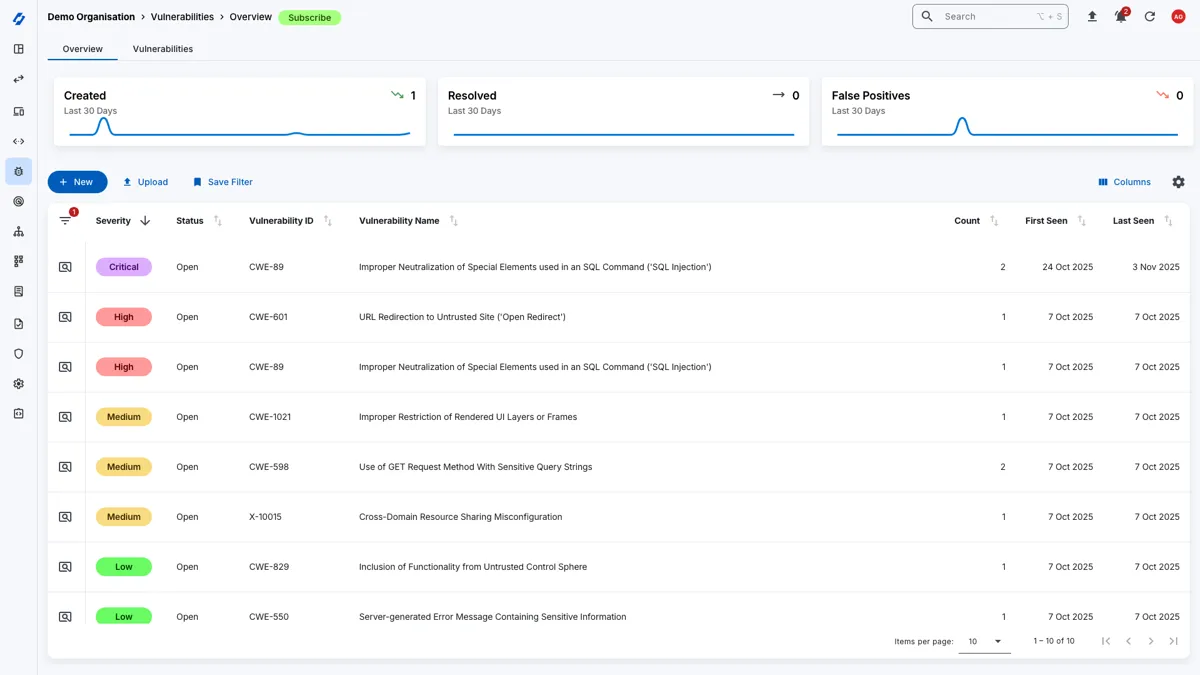
Gain complementary access to the Attack Surface Center platform with your penetration test to manage your vulnerabilities, assets, and track remediation progress.